Learn to look until looking becomes a form of understanding.
Not which paintings to like. Enough understanding to discover why you like — or do not like — what you are looking at. Begin with a portrait attributed to Leonardo, then test your looking against Bosch. Attention travels; a different work also asks you to change the questions.
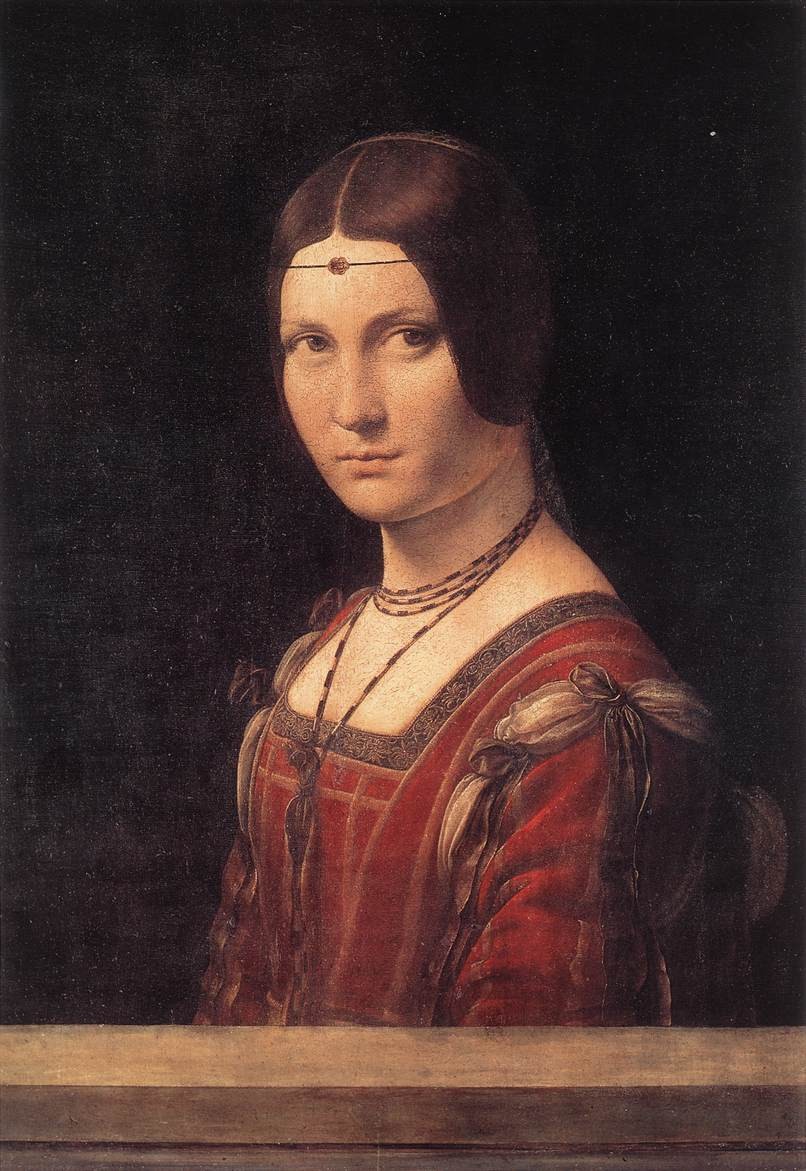
What do you notice?
No answer is required. Look for as long as it holds your attention before reading on.
The painting now known as La Belle Ferronnière is generally attributed to Leonardo da Vinci. Its traditional title does not establish the woman's identity. That distinction matters: the label is historical information, not proof of who sat for the work.
Look at the nearly frontal gaze, the slight rotation of her shoulders and the dark, quiet background. Leonardo guides your attention with posture, light and the modeled transition from shadow to skin.
The fine ornament across her forehead is conspicuous, but the title alone is not reliable evidence of its meaning or of her identity. The face is carefully observed; the surrounding world has almost disappeared.
Ask a more disciplined question: which specific decisions about composition, light and distance make this portrait appear immediate?
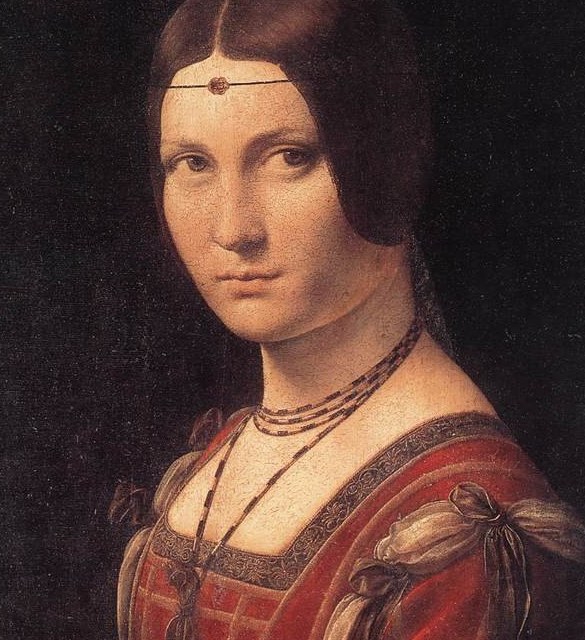
What do you see now that you did not see before?
In this enlarged detail, inspect the soft modeling of the cheeks and eyelids, the firm line of the hair ornament and the sitter's gaze. Describe those observable choices before attempting to infer character or intention. A close view helps you verify details; the complete portrait reveals what those details do together.
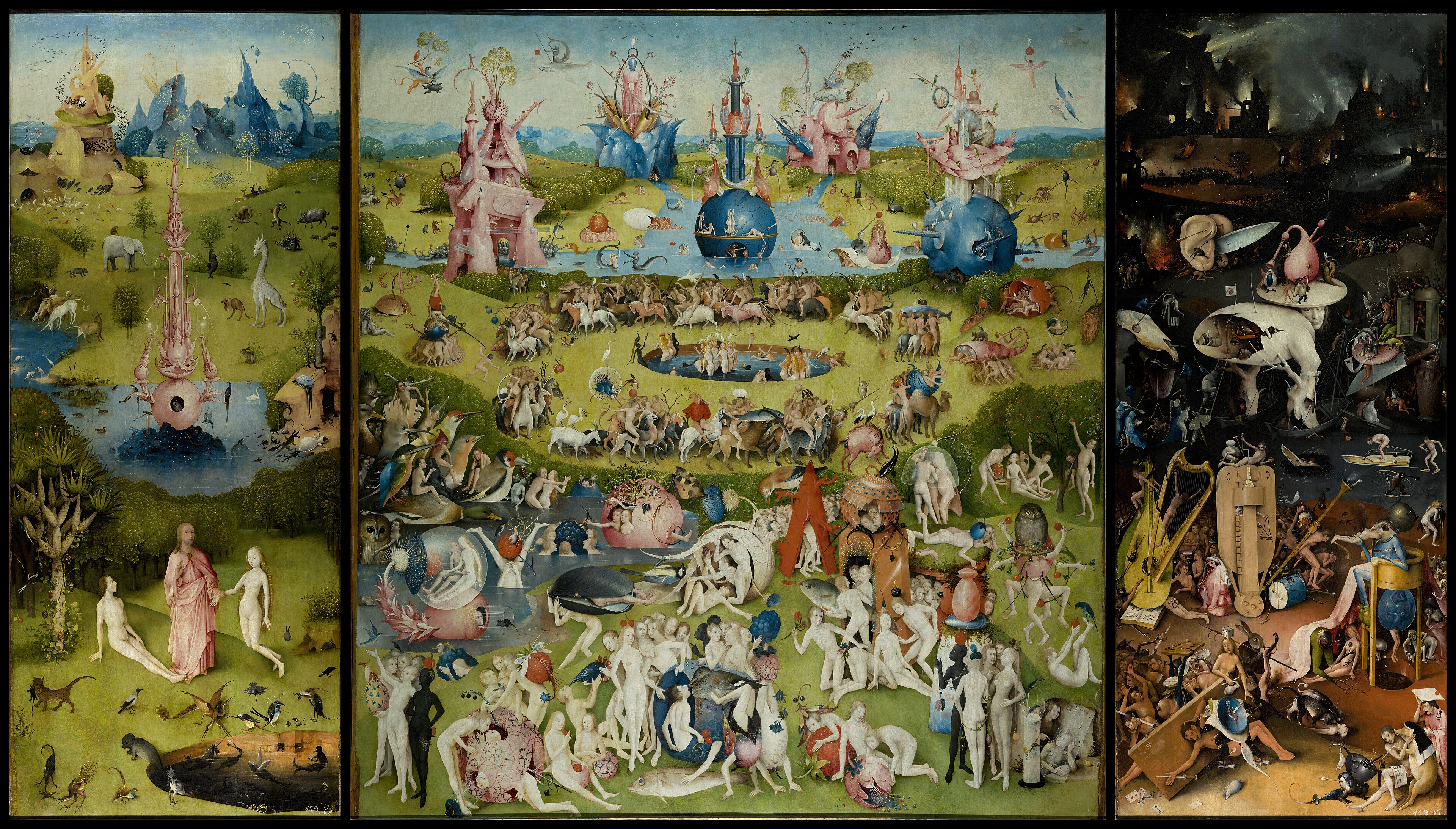
Which questions travel? Which need to change?
Leonardo concentrates attention on one carefully modeled face. Bosch distributes it across a world. Begin with the relation between the bright panels and the dark right-hand scene, then notice how recurring bodies, fruit and circular arrangements lead your eye.
A close crop may make one strange detail dominate. Step back to the triptych: what does that detail do among its neighbours? Describe an observable change of scale before deciding what it means.
Context and uncertainty →
The work is an oil-on-panel triptych. Its densely populated scenes sustain competing interpretations; recognising a motif does not supply a complete, uncontested key to the painting. Use the Prado collection record to distinguish documented object information from proposed meanings.
Inspect the closed exterior, panels, evidence and interpretations →
La Belle Ferronnière, attributed to Leonardo da Vinci, Musée du Louvre; local reproduction and a detail from it. Bosch, The Garden of Earthly Delights, Museo del Prado; local reproduction. These reproductions are for close reading and are not substitutes for the original paintings.
Bosch reproduction record